
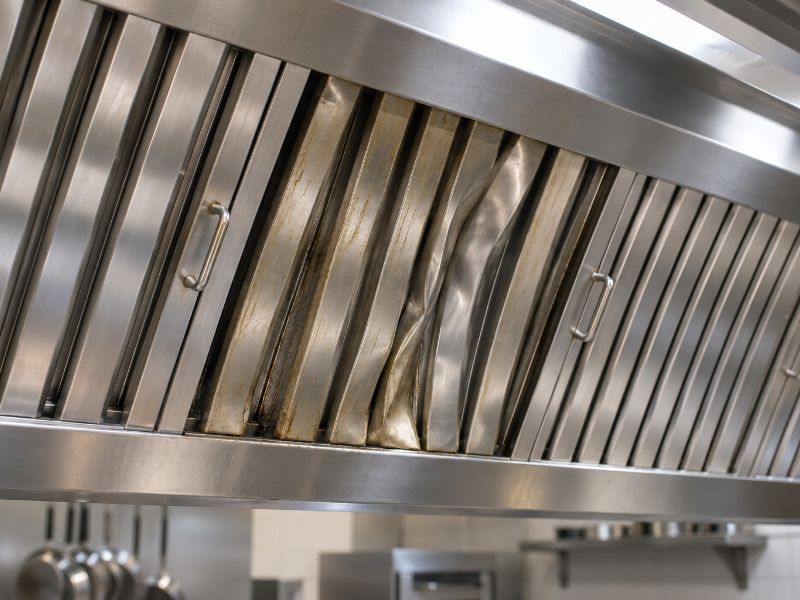
A bent baffle filter, a damaged frame or even a missing filter might seem like a minor maintenance issue in a busy commercial kitchen. However, these small defects can have consequences for the entire extraction system, potentially allowing more airborne grease to travel into the ductwork. For restaurant operators, facilities managers and building maintenance teams, overlooking damaged filters can contribute to increased grease accumulation, additional maintenance costs and potential fire hazards. At Cater Clean 24 Seven, we understand that effective Duct Cleaning is only one part of maintaining a safe and efficient kitchen extraction system. Regular filter inspections, timely replacements and planned maintenance all play an important role in controlling grease build-up.
Why Are Baffle Filters Important in Commercial Kitchens?
Commercial kitchen extraction systems remove heat, smoke, steam and airborne grease produced during cooking. Before this contaminated air enters the ductwork, it passes through grease filters positioned inside the extraction canopy.
Baffle filters use a series of metal blades to force the extracted air to change direction. As the air moves through the filter, some grease droplets separate from the airflow and collect on the metal surfaces before draining into the grease collection system.
This process reduces the amount of grease entering the extraction ductwork.
However, baffle filters do not capture every grease particle, even when they are correctly installed and maintained. This is why regular Kitchen Extract Cleaning remains essential.
What Happens When a Baffle Filter Is Missing, Bent or Damaged?
The consequences depend on the type and extent of the damage. Nevertheless, several common defects can affect how effectively a filter performs.
1 Missing Filters Allow Grease-Laden Air to Bypass Filtration
When a baffle filter is missing, the extraction system may continue operating, giving kitchen staff the impression that nothing is wrong.
However, the gap left behind allows a proportion of grease-laden air to enter the canopy plenum without passing through the intended filtration stage.
As a result, more grease may accumulate on internal surfaces, including the ductwork and extraction fan.
Over time, this can increase the level of contamination that specialist Ductwork Cleaning needs to address.
2 Bent Filters Can Create Gaps Around the Frame
A baffle filter does not necessarily need to be broken to cause problems.
Repeated handling, incorrect storage or accidental damage during cleaning can distort the metal frame. Even a relatively small bend may prevent the filter from sitting correctly inside the canopy.
If gaps develop between the filter and its housing, extracted air can bypass the baffle blades.
Consequently, the filter may no longer provide the grease separation performance intended by the manufacturer.
3 Damaged Baffle Blades Can Affect Grease Capture
The internal arrangement of a baffle filter is designed to separate grease droplets from moving air.
When these blades become damaged, distorted or detached, the filter may no longer direct airflow as intended.
This can reduce grease separation efficiency and potentially affect how grease drains towards the collection tray.
Although the extraction system might still appear to function normally, additional grease may be entering areas that kitchen staff cannot see.
4 Poorly Fitted Filters Can Create Wider Maintenance Problems
A filter that is the wrong size or incorrectly installed may leave gaps or interfere with the intended airflow through the canopy.
In some cases, this can contribute to uneven airflow distribution or reduced grease capture.
Furthermore, filters with damaged handles, loose components or unstable frames may present additional handling and maintenance risks.
For this reason, replacement filters must be correctly specified for the extraction canopy rather than selected simply because they appear to fit.
How Damaged Filters Can Increase the Need for Duct Cleaning
Grease accumulation is one of the principal fire hazards associated with commercial kitchen extraction systems.
Although baffle filters reduce the amount of grease entering the ductwork, they cannot prevent all deposits from forming.
When filters are missing or damaged, additional airborne grease may reach the internal canopy, horizontal ductwork, vertical risers and extraction fan.
Over time, these deposits can become increasingly difficult to remove.
This is particularly concerning in kitchens operating for long hours or producing high volumes of grease through frying, grilling and other intensive cooking processes.
Importantly, a damaged baffle filter does not automatically mean that the extraction system requires an immediate full clean. However, it does justify further inspection, particularly where the damage may have existed for an extended period.
Professional Kitchen Duct Cleaning removes accumulated grease from the internal extraction system, helping to reduce fire risk and maintain safe operating conditions.
Replacing a damaged filter addresses the filtration problem, but it does not remove grease that has already entered the ductwork.
Both filter maintenance and specialist duct cleaning are therefore necessary parts of a comprehensive extraction hygiene programme.
Why Regular Baffle Filter Inspections Matter
A simple visual inspection can help identify problems before they contribute to wider extraction system contamination.
Facilities managers and kitchen operators should ensure that routine checks cover the following areas:
- Missing filters – Confirm that every required filter is installed and correctly positioned.
- Bent or distorted frames – Check for gaps between the filters and the canopy housing.
- Damaged baffle blades – Look for loose, broken or misshapen internal components.
- Grease accumulation – Identify excessive deposits on filters, surrounding surfaces and collection trays.
- Handles and fixings – Check that filters remain secure and can be safely removed for cleaning.
- Correct fit and orientation – Confirm that filters match the canopy specification and sit in their intended position.
Any damaged or missing filter should be reported promptly and assessed for replacement.
The BESA DW/172 specification for kitchen ventilation systems recommends visual inspections of kitchen extraction components at intervals determined by the cooking process, with no more than one week between inspections. It also identifies weekly cleaning as a typical minimum for self-draining baffle filters and collection drawers, subject to the manufacturer’s instructions.
Planning Portal+1
Busy commercial kitchens may require more frequent attention.
Why Filter Replacement Does Not Replace Professional Duct Cleaning
One common misconception is that maintaining clean filters eliminates the need for specialist extraction cleaning.
Unfortunately, this is not the case.
Even correctly fitted and regularly cleaned baffle filters allow some grease particles to pass into the system. These deposits gradually accumulate on internal surfaces, including areas that cannot be reached through routine kitchen cleaning.
Furthermore, grease contamination may remain after a damaged filter has been replaced.
This is why a planned Kitchen Ventilation Cleaning programme should consider the complete extraction route, from the canopy through to the final discharge point.
At Cater Clean 24 Seven, our specialist cleaning teams assess grease accumulation, identify access limitations and provide photographic evidence and cleaning reports to help building managers understand the condition of their systems.
Where sections of ductwork cannot be accessed, these limitations should be clearly documented rather than presented as having been cleaned.
Can Damaged Baffle Filters Affect Fire Safety and Insurance?
Potentially, yes.
Grease deposits within kitchen extraction systems create a combustible fuel source. If a fire starts within the cooking area, accumulated grease can contribute to its spread through the extraction system.
Missing or damaged filters may increase the amount of grease reaching these internal surfaces and can compromise the intended filtration arrangement.
For businesses responsible for commercial kitchens, this makes filter condition a relevant consideration within wider fire risk management.
Building operators should also review their insurance requirements, as commercial property policies may specify extraction cleaning frequencies and maintenance obligations.
Keeping records of filter inspections, replacements and professional duct cleaning provides useful evidence that the business is actively managing its extraction system.
However, a cleaning certificate alone does not guarantee insurance compliance. Operators must also satisfy the specific conditions of their policy and any applicable fire safety duties.
Common Questions About Damaged Baffle Filters
Can a commercial kitchen operate with a missing baffle filter?
An extraction fan may continue running with a filter missing, but this does not mean the system is safe or operating as designed. Grease-laden air can bypass filtration, so the defect should be addressed before continued use of the affected cooking equipment.
Does a bent baffle filter need replacing?
Not every minor cosmetic mark makes a filter unusable. However, if the frame is distorted, the filter no longer fits correctly or the baffle blades are damaged, replacement may be necessary.
Can damaged filters cause grease to build up faster in ductwork?
Yes. Missing, poorly fitted or damaged filters can reduce effective grease separation, allowing additional grease particles to enter the extraction system.
How often should baffle filters be inspected?
Inspection frequency should reflect cooking activity and manufacturer guidance. Weekly visual checks are an important minimum reference under DW/172, although busy kitchens may require daily checks.
Will replacing damaged filters reduce the frequency of duct cleaning?
Correctly maintained filters help control grease entering the system, but they do not remove the need for professional cleaning. The appropriate duct cleaning frequency depends on cooking intensity, system condition, grease accumulation and applicable requirements.
Small Maintenance Issues Should Not Become Larger Extraction Problems
A damaged baffle filter can be easy to overlook, particularly in a busy kitchen where equipment continues to operate and there are no immediately obvious signs of a problem.
However, what appears to be a small defect at canopy level may contribute to increased grease accumulation throughout the extraction system.
For restaurant operators, facilities managers, hotel groups and commercial property owners, regular filter inspections offer a straightforward opportunity to identify problems early.
Combining these checks with timely replacement and professional duct cleaning helps maintain effective grease management and reduces the risk of avoidable maintenance issues.
Need Advice on Baffle Filters or Duct Cleaning?
Cater Clean 24 Seven provides specialist Duct Cleaning and kitchen extraction hygiene services for commercial kitchens across the UK.
We also offer a dedicated Replacement Filters service, supplying standard and bespoke baffle filters for commercial extraction canopies.
Whether you need replacement filters, an inspection of your extraction system or a planned cleaning programme across multiple premises, our Operations Team can discuss your requirements.
Contact Cater Clean 24 Seven
Website: www.caterclean24seven.co.uk
Telephone: 0203 640 8247
Email: info@24sevengroup.co.uk